
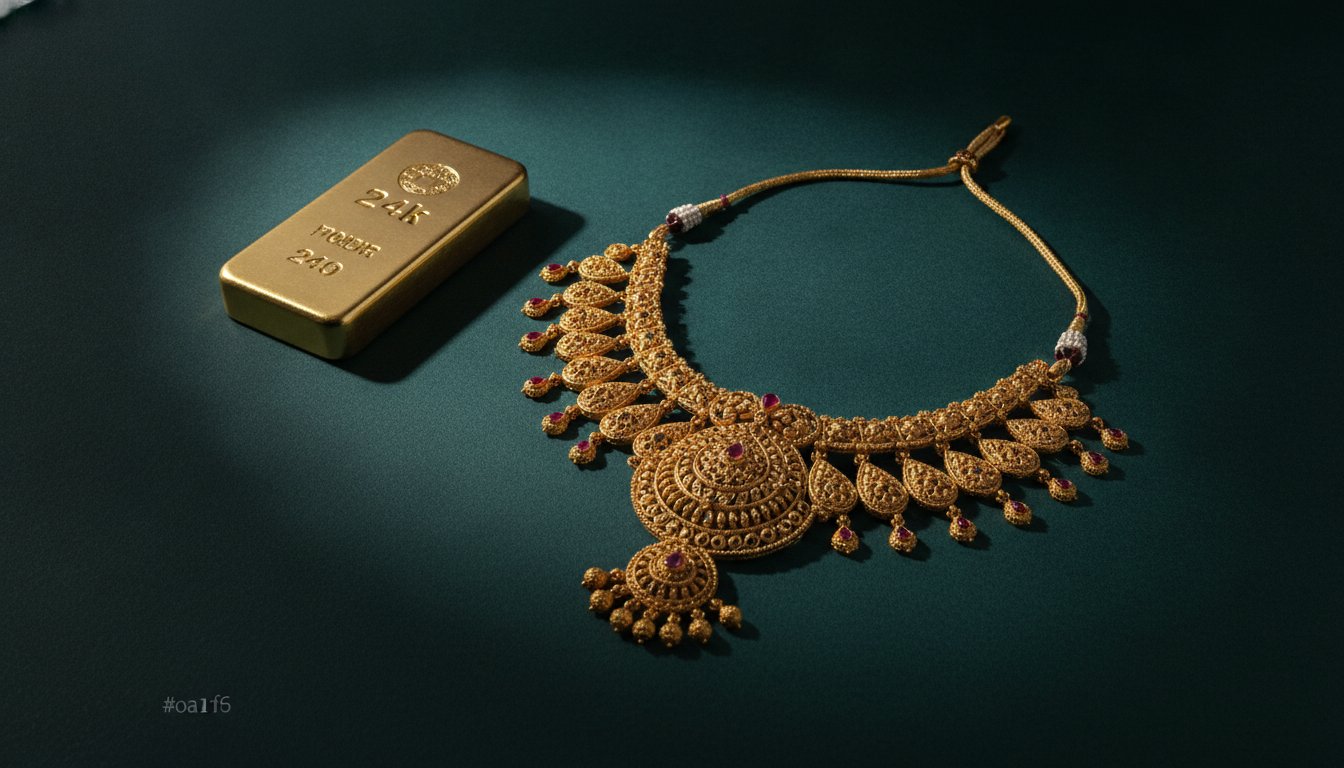
The “purest” choice isn’t always the most precious when it’s meant to be worn close to your heart. While 24k gold represents the ultimate standard of purity, its soft, malleable nature often makes it a fragile choice for the intricate stories told through Indian craftsmanship. You’ve likely felt the pull between wanting the highest karat and fearing that your bridal set might lose its shape or security over time. Choosing between 22k vs 24k gold for jewellery India is a journey of balancing timeless value with the practical grace of daily life. It’s about celebrating your milestones with pieces that are as resilient as they are radiant.
This guide offers the clarity you need to make an empowered decision for your next investment or heirloom collection. We’ll demystify the essential differences in durability and explain why 22k gold remains the soulful favorite for modern, lightweight designs. You’ll gain the tools to verify your purchase through the latest 2026 HUID hallmarking regulations, ensuring every gram is accounted for with total transparency. From understanding resale fluctuations to choosing the right brilliance for your style, you’re about to transform uncertainty into the quiet confidence of a seasoned collector.
Key Takeaways
- Master the math of purity by learning why 24k represents absolute gold while 22k offers the perfect blend for wearable art.
- Balance the choice between 22k vs 24k gold for jewellery India to ensure your bridal or daily pieces maintain their shape and security for a lifetime.
- Compare the investment potential of high-purity gold bars against the emotional and practical value of wearable 22k ornaments.
- Secure your purchase by understanding the 2026 BIS Hallmarking and HUID standards that guarantee transparency in every showroom visit.
- Explore why lightweight 22k gold is the visionary choice for modern lifestyles, offering a balance of structural strength and brilliant elegance.
Decoding Gold Karatage: What 22k and 24k Mean for Indian Buyers
Gold is more than a precious metal in India; it’s a legacy woven into the fabric of our celebrations. Before you choose a piece that resonates with your personal journey, you must speak the language of karats. The Karat system is the global heartbeat of gold measurement, dividing the metal into 24 equal parts to determine its absolute purity. Understanding Fineness and the Karat System is your first step toward making a purchase that honors both your aesthetic vision and your financial goals. When you compare 22k vs 24k gold for jewellery India, you’re looking at a choice between raw purity and practical elegance.
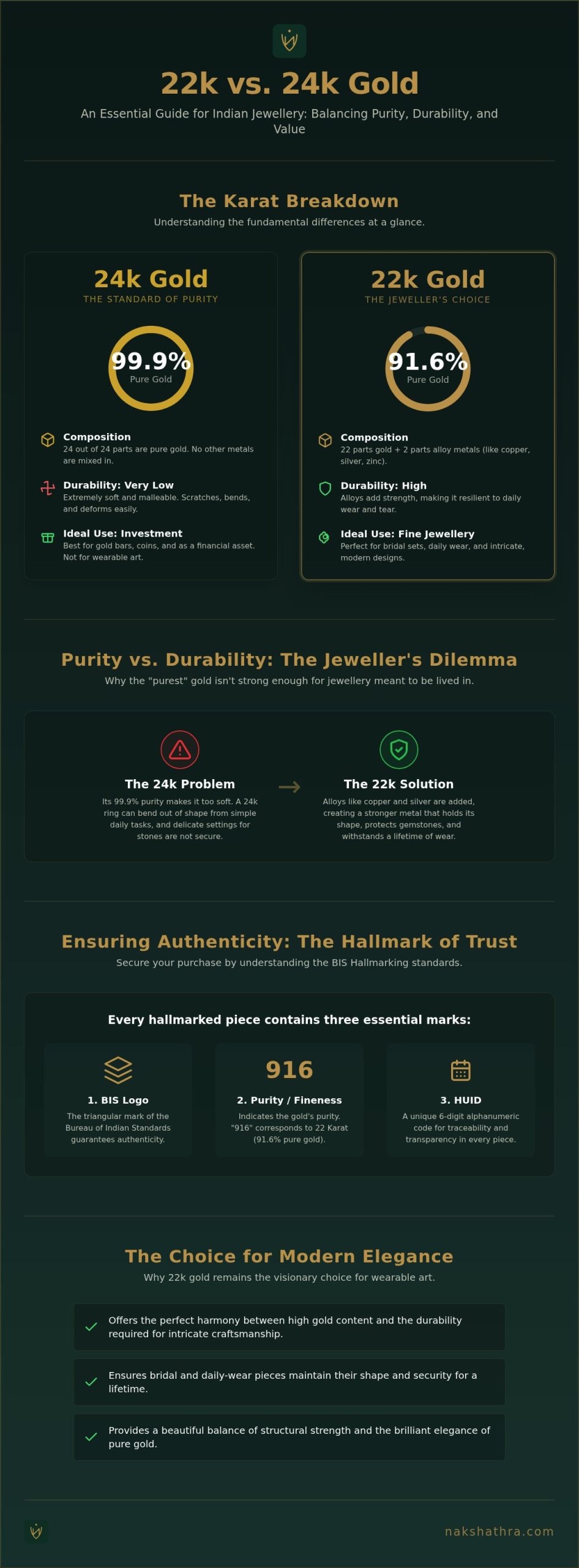
The math is simple yet profound. 24k gold represents 24 out of 24 parts gold, achieving a purity level of 99.9%. In contrast, 22k gold consists of 22 parts gold mixed with 2 parts of other metals, resulting in 91.6% purity. This is why you’ll see the “916” hallmark on high-quality ornaments across the country. That remaining 8.4% isn’t merely a filler; it’s a curated blend of alloys like copper, silver, or zinc. These metals act as a supportive skeleton, giving the gold the resilience it needs to hold its shape through years of wear. For generations, Indian households have favored this 916 standard because it strikes a perfect harmony between high gold content and the durability required for intricate, traditional craftsmanship.
24k Gold: The Standard of Absolute Purity
24k gold is the metal in its most honest form. It possesses a brilliant, distinctively warm yellow glow that has captivated hearts for centuries. However, this purity comes with a unique challenge: 24k gold is incredibly soft and malleable. It’s so delicate that it can be scratched with a fingernail or bent with minimal pressure. Because of this, it’s rarely used for intricate jewelry. Instead, it’s the visionary choice for investment bars and coins. It serves as a stable foundation for wealth, even if it isn’t quite ready for the rigors of a bridal collection.
22k Gold: The ‘916’ Standard for Indian Jewelry
When you seek a piece for a modern lifestyle, 22k gold is the benchmark for excellence. By mixing 22 parts of gold with 2 parts of stronger metals, craftsmen create a material that’s tough enough for daily wear but still retains the deep, soulful luster of pure gold. It’s the ideal medium for lightweight gold designs that require structural integrity. Whether it’s a delicate chain or a complex bridal set, 22k gold ensures that your investment remains secure, beautiful, and wearable for a lifetime. It’s the gold you don’t just own; it’s the gold you live in.
Purity vs. Durability: Why You Can’t Wear 24k Gold Jewelry
The dream of owning “pure” gold often collides with the physical reality of daily wear. While 24k gold is a marvel of nature, its properties make it a difficult partner for wearable art. In its 99.9% pure state, gold is exceptionally soft. Imagine a wedding band that warps when you carry groceries or a pendant that scuffs just by resting against your skin. This is the “softness” problem. Within weeks, a 24k ring can lose its perfect circle, becoming an oval that no longer fits comfortably. When you evaluate 22k vs 24k gold for jewellery India, you aren’t just choosing a purity level; you’re choosing how long your memories will remain intact.
A 22k necklace can gracefully endure decades of celebrations, maintaining its intricate patterns and polish. A 24k alternative, however, lacks the structural backbone to survive the friction of movement. This difference in lifespan is why 22k remains the heart of Indian craftsmanship. It offers the resilience needed for the modern lifestyle while retaining that unmistakable, rich yellow hue that symbolizes prosperity. It’s about finding that sweet spot where value meets versatility.
The Science of Alloys in Jewelry Making
To transform gold from a soft metal into a wearable masterpiece, jewelers introduce small amounts of copper and silver. These alloys are the secret to tensile strength. They act as a stabilizing force, allowing the gold to resist the scratches and dents of a busy life. For high-quality bridal sets, 22k is the non-negotiable minimum purity. It provides the firm grip required for prong settings, ensuring that your precious stones stay exactly where they belong. There is always a trade-off: higher karatage offers more gold, but it significantly reduces the metal’s ability to withstand the tests of time and touch.
Suitability for Different Jewelry Types
Your choice of gold should reflect how you intend to live in it. Wedding bands and daily-wear earrings face constant contact, making 22k or 18k the only logical choices for security. In a 24k setting, the metal is so pliable that the prongs holding a diamond or gemstone can easily pull apart, leading to the heartbreaking loss of a stone. 22k gold serves as the essential industry standard for lightweight gold, providing the necessary strength to support delicate, modern silhouettes without sacrificing the metal’s iconic yellow glow.
If you’re looking for pieces that honor this balance of strength and beauty, exploring a Bridal Jewellery Collection designed for longevity is a wise next step. By choosing the right karatage, you ensure that your jewelry isn’t just a purchase, but a lasting part of your personal legacy.
Investment Value: Bars and Coins vs. Wearable Jewellery
Gold in India isn’t just a commodity; it’s a silent guardian of family prosperity. Many people feel torn between the clinical efficiency of a 24k gold coin and the soulful allure of a 22k necklace. While 24k bullion is often hailed as the purest investment, it lacks the functional beauty that defines our cultural experience. When you weigh 22k vs 24k gold for jewellery India, you’re looking at two different ways to store value. One sits in a locker, while the other celebrates your life’s greatest moments. Balancing your portfolio with both 24k savings and 22k luxury allows you to enjoy your wealth today while securing your tomorrow.
Buying a 24k coin typically involves lower making charges, often ranging from 1% to 3%. In contrast, jewelry includes making charges that reflect the artisan’s labor. The modern Indian market has changed. With mandatory HUID hallmarking, the gold content in your 22k ornaments is now as verifiable as any bar. When you decide to exchange or sell, you receive the prevailing market rate for the gold’s weight, minus the initial making charges. This makes 22k jewelry a form of wearable wealth that combines financial security with personal expression.
Resale Dynamics in India
Jewelers calculate the value of 22k gold by multiplying the current market rate by the weight of the gold, accounting for its 91.6% purity. Hallmarked jewelry retains nearly the same gold value as coins because the purity is guaranteed by the BIS. While making charges represent an upfront cost that isn’t recovered during resale, they’re the price of transforming raw metal into a masterpiece. For many, the ability to wear their investment for years outweighs the marginal loss of making charges during a future exchange.
The Allure of Lightweight 22k Gold
The modern era has ushered in a shift toward modern lightweight 22k gold jewellery, which offers sophistication without the burden of excessive weight. Today’s brides are moving away from heavy, cumbersome sets in favor of versatile 22k pieces that transition seamlessly from the wedding altar to festive dinners. These designs often incorporate diamond settings, where 22k gold provides a warmer, more traditional frame compared to the cooler tones of 18k or platinum. It’s a visionary approach to luxury that respects both your heritage and your contemporary lifestyle.
Pricing and Standards: Global Rates vs. Indian Market
The cost of your jewelry isn’t just a local number; it’s a reflection of global economic shifts. When you compare 22k vs 24k gold for jewellery India, you’ll notice a clear price gap that mirrors their purity levels. As of July 22, 2026, the market reflects this distinction vividly. 24K gold is priced at ₹14,438 per gram, while 22K gold stands at ₹13,236 per gram. This difference of over ₹1,200 per gram represents the premium for absolute purity, whereas the 22k rate offers a more accessible entry point for those seeking wearable elegance without compromising on the metal’s intrinsic value.
Your final invoice also accounts for the 15% effective import duty, which includes a 10% Basic Customs Duty and a 5% Agriculture Infrastructure and Development Cess. On top of this, a 3% GST applies to the gold value, while a 5% GST is levied on the making charges. These regulations ensure that the gold entering the Indian market meets national standards, though they do impact the final showroom price. Understanding these components empowers you to see the true value of your purchase beyond the initial sticker price.
Decoding the Daily Gold Rate
Local showroom tags don’t exist in a vacuum. The international gold price today is the foundation for every quote you receive in India. Because gold is traded globally in US Dollars, the strength of the Indian Rupee against the USD plays a vital role. If the Rupee weakens, your gold purchase might cost more even if global prices remain steady. You’ll often see a “Board Rate” in showrooms, which is the base market price, while the “Showroom Rate” might include specific operational costs or minor local variations that reflect the jeweler’s craftsmanship and service standards.
The Trust Factor: Hallmarking and HUID
The 2026 BIS Hallmarking rules have transformed how we verify purity. Every piece of hallmarked jewelry must now feature three distinct marks: the BIS logo, the purity grade (such as 22K916), and the Hallmark Unique Identification (HUID) number. This HUID is a six-character alphanumeric code that acts as a digital fingerprint for your jewelry. It’s your best defense against fraud, allowing you to verify the authenticity of your piece through the BIS Care app. Buying from established showrooms ensures that these standards are met with absolute integrity. It gives you peace of mind that your legacy is protected by the highest regulatory standards in the country.
To experience this transparency firsthand and view our latest certified designs, we invite you to explore our showroom collections where every piece of lightweight gold is verified for your security.
The Nakshathra Choice: Why 22k Gold Defines Modern Elegance
True elegance doesn’t demand the heavy weight of tradition; it invites the lightness of the future. At Nakshathra, we believe that your jewelry should be a supportive companion to your personal journey, not a burden kept in a locker. Choosing 22k vs 24k gold for jewellery India is more than a technical decision. It’s a statement about how you value your own comfort and style. We’ve curated our collections to honor the rich, soulful luster of 22k gold while ensuring every piece is resilient enough for the modern, fast-paced life you lead. It’s about bringing high standards into your everyday experience.
Our focus remains on the intersection of legacy and contemporary design. We specialize in lightweight gold that feels like a second skin, allowing you to move through your day with grace and confidence. By prioritizing 22k gold, we offer you the perfect medium for intricate craftsmanship that 24k gold simply cannot sustain. This commitment to durability doesn’t mean a compromise on brilliance. Instead, it provides a stable, glowing foundation for our Diamond Collections, where the warmth of the gold enhances the fire of every stone.
Redefining the Bridal Aesthetic
Modern brides are rewriting the rules of the wedding day. The shift away from heavy, cumbersome ornaments toward wearable art is a reflection of a visionary spirit. When deciding between modern bridal jewelry gold or diamond for 2026, the answer often lies in the harmony of both. Our Bridal Jewellery Collection uses 22k gold as a sophisticated canvas, providing the structural integrity needed for complex diamond settings while maintaining that iconic Indian glow. These pieces aren’t just for the altar; they’re designed to transition seamlessly into your social calendar, ensuring your investment continues to shine long after the ceremony.
The Nakshathra Showroom Experience
Transparency is the heartbeat of our brand. While digital guides offer clarity, nothing replaces the quiet authority of a physical showroom visit. We invite you to experience our latest lightweight collections in person, where you can verify the HUID markings and feel the weight of the gold for yourself. Our expert guides are dedicated to ethical sourcing and honest pricing, helping you navigate the nuances of purity with total peace of mind. Every visit is a personalized consultation designed to empower your choice. We’re here to ensure that your next heirloom is a perfect reflection of your success, your values, and your unique story.
Embrace a Legacy of Brilliance and Trust
Deciding between 22k vs 24k gold for jewellery India is a powerful step toward owning your narrative. You’ve discovered that while 24k gold is a silent guardian of pure wealth, 22k gold is the resilient, glowing medium for the milestones you wear every day. By insisting on the latest 2026 HUID hallmarking standards, you ensure that your investment is as honest as it is beautiful. Modern elegance is no longer about the heaviest ornaments; it’s about pieces that move with you, reflecting your personal growth and contemporary lifestyle.
As specialists in curated diamond and lightweight gold, Nakshathra is dedicated to being your supportive companion. With 25+ showrooms across four countries, we provide the grounded accessibility and expert craftsmanship you deserve. Every piece of our BIS hallmarked jewelry is a celebration of transparency and ethical integrity. Discover the Elegance of Nakshathra’s 22k Gold Collections and find a masterpiece that resonates with your unique journey. Your future is bright, and it deserves to be adorned with confidence.
Frequently Asked Questions
Can 24k gold be used for making wedding rings?
24k gold is rarely used for wedding rings because its extreme softness leads to warping and loss of shape within weeks of daily wear. For a symbol meant to last a lifetime, 22k gold is the visionary choice. It provides the essential strength needed to hold intricate designs and secure precious gemstones without sacrificing that iconic, soulful yellow brilliance you desire.
What is the difference in resale value between 22k and 24k gold in India?
The resale value of gold in India is strictly based on the weight of the pure gold content at the prevailing market rate. While 24k gold coins return the full value of their weight, 22k jewelry returns 91.6% of its weight value because of its alloy composition. It’s important to remember that making charges and GST paid during the initial purchase are not recovered during resale.
Why is 22k gold often called ‘916 gold’?
22k gold is called 916 gold because it contains 91.6% pure gold, which translates to 916 parts of gold per 1000 parts of the metal. This specific percentage is the benchmark for high-quality Indian ornaments. It ensures that your pieces remain radiant while gaining the structural integrity necessary for the modern, lightweight designs that define a contemporary lifestyle.
Does 24k gold change color over time compared to 22k?
Pure 24k gold does not change color or tarnish because it is chemically stable, though 22k gold may develop a very subtle patina over many years due to its copper or silver alloys. This isn’t a sign of lower quality but rather a natural characteristic of the strengthening metals. Regular professional polishing easily restores the original luster of your 22k pieces.
Is it better to buy 24k gold coins or 22k jewelry for investment?
Choosing between 24k coins and 22k jewelry depends on whether you value clinical financial growth or the joy of wearable wealth. 24k coins are ideal for pure savings due to minimal making charges. However, 22k jewelry allows you to celebrate your personal journey every day, offering an emotional return on investment that a coin in a locker simply cannot match.
How do I check if my 22k gold jewelry is authentic in 2026?
To verify 22k vs 24k gold for jewellery India in 2026, you must look for the three mandatory BIS hallmark signs. These include the BIS logo, the purity grade like 22K916, and the Hallmark Unique Identification (HUID) number. You can instantly verify this six-digit alphanumeric code through the BIS Care mobile app to ensure your purchase is authentic and ethically sourced.
Why are making charges higher for 22k jewelry than 24k bars?
Making charges are higher for 22k jewelry because they cover the artistry, labor, and intricate wastage involved in creating a wearable masterpiece. A 24k bar is a simple cast product with minimal design requirements. In contrast, a lightweight 22k necklace involves hours of specialized craftsmanship to ensure it meets the sophisticated standards of a modern bridal collection.
Does the gold rate in the USA affect the price of 22k gold in India?
Yes, the international gold rate in the USA significantly dictates local prices in India because gold is a globally traded commodity priced in US Dollars. When the international market fluctuates or the Indian Rupee weakens against the USD, the base price for 22k gold in India shifts accordingly. This global connection is why tracking international trends is essential for making an empowered purchase.
Comments are closed