
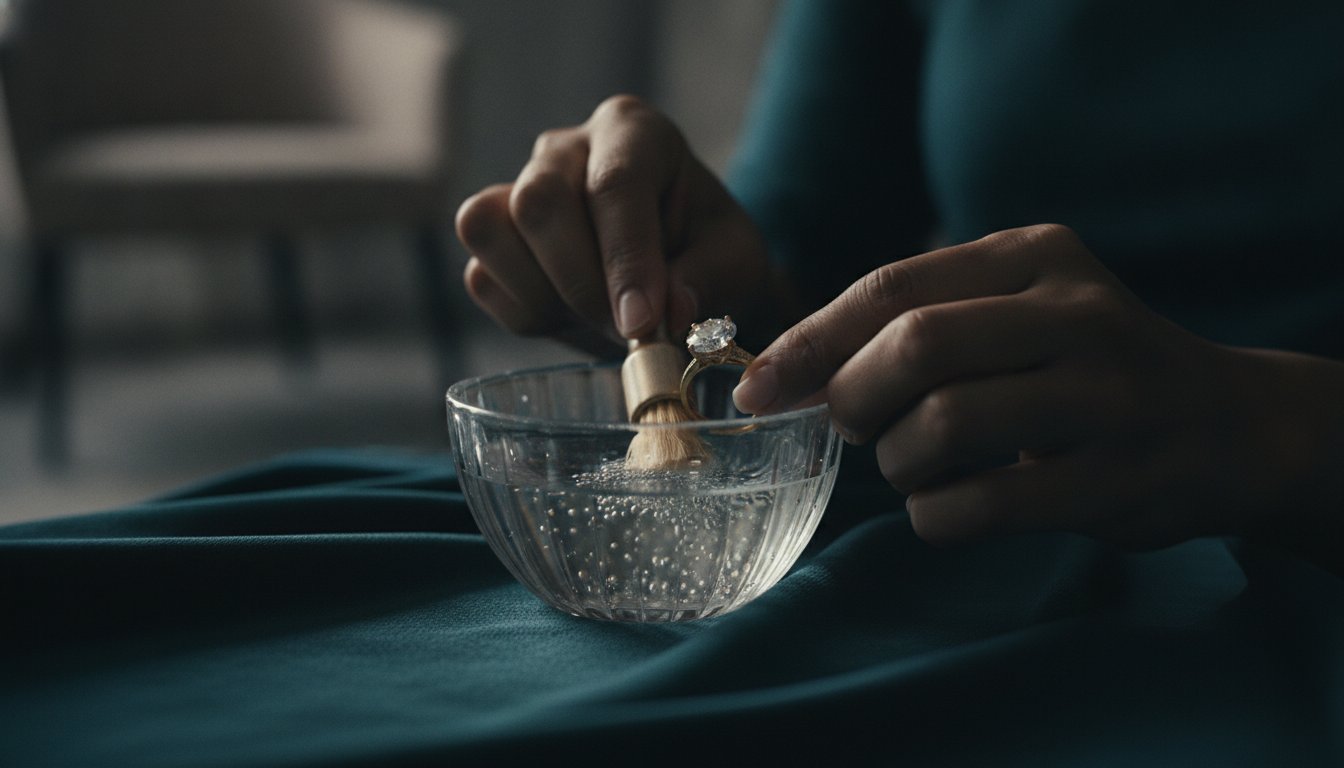
That breathtaking flash of light you fell in love with isn’t a permanent state of being. It’s a relationship you nurture every single day. You likely cherish your pieces as more than just accessories; they are milestones and memories captured in stone. It’s completely natural to feel a pang of worry when a favorite ring looks a bit cloudy or when you wonder if a prong feels slightly loose after a busy afternoon. Mastering diamond jewelry care transforms that anxiety into confidence, ensuring your most precious items stay secure and luminous through every chapter of your life.
We believe that maintaining your treasures should be an empowering ritual rather than a source of confusion. You’ll master the art of maintaining your diamond’s fire and protecting your jewelry’s legacy with our expert-approved care framework. This guide walks you through safe at-home cleaning methods using gentle solutions, professional maintenance schedules that prevent stone loss, and the essential steps to ensure your heirlooms remain as radiant as the day they were first worn. From restoring original brilliance to ensuring structural integrity, we’re here to help you preserve your sparkle for a lifetime.
Key Takeaways
- Understand why diamonds naturally attract oils and how the “Last On, First Off” rule preserves their clarity against everyday beauty products.
- Master the “Gentle Soak” method for safe at-home diamond jewelry care to restore original fire without using harsh or abrasive chemicals.
- Explore the importance of individual storage to protect your collection from accidental scratches and environmental factors like humidity.
- Learn why a professional six-month ritual is non-negotiable for inspecting prong integrity and maintaining the structural narrative of your heirlooms.
Understanding the Science of Diamond Brilliance
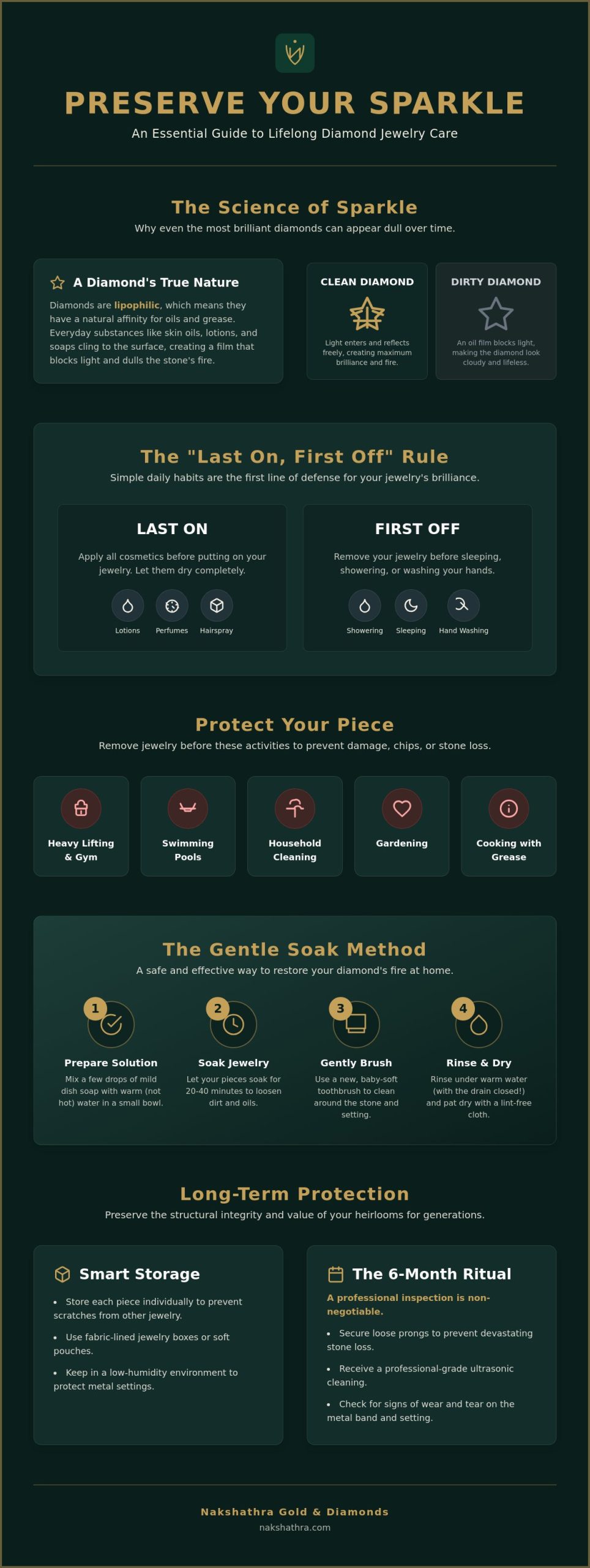
A diamond captures light and transforms it into a personal signature of fire and grace. That eternal brilliance, however, isn’t entirely indestructible. To truly master diamond jewelry care, you must first understand the chemistry beneath the surface. While a diamond is the hardest natural substance on Earth, it possesses a curious magnetic quality for grease. Scientifically, diamonds are lipophilic, meaning they have a natural affinity for oils. Whether it’s the natural sebum from your skin or the luxurious hand cream you applied this morning, these substances cling to the stone’s facets with stubborn persistence.
When you admire your jewelry, you’re seeing the 4Cs (cut, color, clarity, and carat) in action. Dirt and oils can drastically alter your perception of these qualities. A thin film of residue acts like a foggy window, masking the stone’s true clarity and making a high-quality diamond appear dull or even yellowed. By exploring the science of diamond properties, we learn that light must travel through the stone and reflect back to your eye with precision. If that path is blocked by microscopic grime, the visual narrative of the stone is interrupted.
Why Your Jewelry Loses Its Sparkle
Everyday life is surprisingly messy for fine jewelry. Microscopic layers of hairspray, perfume, and soap scum build up over time, settling into the pavilion, the bottom portion of the diamond where light is meant to bounce. This buildup creates a barrier that prevents light from refracting correctly. Scintillation is the play of light across a diamond’s facets. When oil coats these surfaces, the sharp, rhythmic flashes of light turn into a muted, greasy glow that hides the stone’s inherent energy.
The Vulnerability of Gold Settings
The diamond might be tough, but its home is often quite delicate. Most exquisite pieces use 18k gold or higher because of its rich luster and prestige. This metal is malleable. It reacts to friction, harsh household chemicals, and the subtle pressure of daily movement. Lightweight gold pieces are especially prone to bending if handled roughly, requiring a more mindful approach than more substantial bridal jewelry. If you wear white gold, you’re also protecting a thin layer of rhodium plating. This plating provides that signature icy finish, but it can wear away if exposed to abrasive cleaners, eventually revealing the warmer gold tones beneath and compromising the piece’s aesthetic integrity.
The Daily Diamond Care Checklist
Your jewelry deserves a rhythm of its own. It’s not just about the occasional deep clean; it’s about the small, intentional habits that protect your investment and celebrate its story. When you reach for your rings in the morning, always grasp them by the metal band. Touching the stone directly transfers skin oils, which immediately begins to dim the brilliance we worked so hard to understand in the previous section. This simple shift in handling is the foundation of effective diamond jewelry care.
The “Last On, First Off” Philosophy
Think of your jewelry as the final, luminous flourish of your identity. Apply your perfumes, lotions, and hairsprays first. Let them settle and dry completely. Common cosmetics often contain chemicals that can react with gold alloys, especially in delicate lightweight gold pieces, leading to subtle tarnishing or a stubborn film on the stone. By making your jewelry the last step of your beauty routine and the first thing you remove at night, you minimize chemical exposure. Establish a dedicated safe spot on your vanity, like a soft-lined tray, so your treasures are never left vulnerable on a hard countertop or near a dangerous sink drain.
Activities to Avoid While Wearing Diamonds
While your diamonds are built to last, their settings have real-world limits. Remove your jewelry before gardening, heavy lifting, or hitting the gym to prevent prong deformation. A sudden impact against a hard surface can chip even the most durable stone. According to GIA’s Diamond Care and Cleaning Guide, exposure to chlorine in swimming pools can actually stress and weaken the metal settings over time, potentially leading to stone loss.
The distinction between jewelry styles is vital here. A robust piece from a Bridal Jewellery Collection might withstand more than a dainty, everyday pendant, but the risks remain. Grease from cooking and harsh bleach from cleaning supplies are universal enemies. They coat the stone in a stubborn layer of grime and can damage the integrity of the metal finish. It’s always better to let your diamonds sit out the chores, even if you’ve hired a professional service like AlphaLux Cleaning to handle the deep cleaning of your home.
Before you head out the door, perform a quick visual inspection. Hold the piece close to your ear and tap the band gently with your finger. If you hear a faint clicking or “stone rattle,” a prong may have loosened. This five-second morning ritual can be the difference between a simple tightening and losing a precious heirloom forever. It’s a moment of mindfulness that ensures your legacy remains secure.
How to Clean Diamond Jewelry at Home Safely
Restoring that showroom sparkle is simpler than you might imagine. It doesn’t require specialized machinery or harsh chemicals. Instead, a thoughtful 20-minute ritual allows you to reconnect with your pieces while ensuring their longevity. Mastering home-based diamond jewelry care is about patience and using the right tools to reveal the fire hidden beneath daily wear. It’s a restorative process that honors the craftsmanship of your collection.
The Step-by-Step Restoration Process
Start by preparing a simple, effective solution. Mix lukewarm water with a few drops of mild, chemical-free dish soap in a small bowl. Avoid anything with moisturizing agents, bleach, or heavy scents, as these can leave a new film on the facets. Place your jewelry in the bowl and let it soak for 20 to 30 minutes. This window of time allows the soapy water to break down the stubborn oils and lotions that cling to the stone’s lipophilic surface.
Once the soak is complete, use a soft-bristled brush, such as a baby toothbrush, to gently scrub the piece. Focus your attention on the “under-gallery,” which is the space directly beneath the diamond. This hidden area is a magnet for grime. If it remains clogged, light cannot enter the pavilion, and your diamond will look dull regardless of its quality. Rinse the jewelry thoroughly under warm running water. Always ensure the sink drain is closed or use a fine-mesh strainer to prevent any accidents. Finally, pat the piece dry with a lint-free microfiber cloth. This prevents water spots and ensures no tiny fibers get caught in the prongs.
What to Avoid: Dangerous DIY Myths
Many common “hacks” found online can actually cause permanent damage to your treasures. Never use toothpaste to clean your diamonds. While it’s great for your smile, it contains micro-abrasives that can easily scratch the polished surface of gold settings, especially in delicate lightweight gold designs. These scratches are difficult to remove and dull the metal’s natural glow over time.
Boiling water is another significant risk you should avoid. The sudden temperature shift, known as thermal shock, can cause certain diamonds with internal inclusions to fracture. Similarly, while professional jewelers utilize high-end ultrasonic cleaners, consumer-grade versions for home use can be risky. The high-frequency vibrations can rattle stones loose from their prongs if the setting is already slightly compromised. It’s much safer to stick to the gentle, manual touch for your weekly maintenance and leave the heavy machinery to the experts who can inspect the structural integrity first.
Storage and Long-Term Protection Strategies
Your jewelry’s home should be as intentional as the moments it commemorates. While we’ve discussed daily handling and cleaning, the hours your pieces spend at rest are equally vital to long-term diamond jewelry care. Diamonds possess an incredible hardness that allows them to scratch gold, silver, and even other gemstones with ease. This is why the “Individual Housing” rule is paramount. Every ring, earring, and pendant needs its own dedicated space to prevent accidental friction that can dull polished metal or loosen delicate settings.
Environmental factors also play a quiet but significant role in preservation. Extreme humidity can cause certain metal alloys to tarnish over time, while excessive dryness may affect the integrity of some antique jewelry boxes. When you travel with your diamond collections, use a specialized travel roll with padded compartments. Never toss your pieces into a single pouch where they can tangle and collide. This simple precaution ensures your treasures arrive at your destination in the same breathtaking condition they left.
Proper Storage Environments
A fabric-lined jewelry box remains the gold standard for daily preservation. Look for units with individual slots or soft dividers that keep each piece isolated. For items you don’t wear frequently, wrapping them in acid-free tissue paper provides an extra layer of protection against dust and atmospheric moisture. Avoid the temptation to leave your necklaces in a tangled heap on a nightstand. This creates unnecessary stress on the links and makes it nearly impossible to inspect the clasp for wear without causing damage.
Preserving Bridal and Heirloom Pieces
Large, intricate items from a Bridal Jewellery Collection require even more specialized attention. These sets often feature complex under-galleries and multiple prongs that are sensitive to pressure. If you are storing a heavy gold necklace set, ensure it lies flat to avoid stretching the chain or bending the framework. Beyond physical care, maintain a digital and physical archive of your collection. Keep your GIA or IGI certificates in a fireproof safe, separate from the jewelry itself. Having high-resolution photographs of your pieces from multiple angles is essential for insurance purposes and helps document the legacy you’re building for future generations.
Ready to expand your signature style with pieces built to last? Explore our latest Bridal Jewellery Collection to find your next eternal heirloom.
The Importance of Professional Maintenance Rituals
While your home rituals maintain the surface glow, the true longevity of your collection depends on a professional partnership. Think of it as a wellness check for your heirlooms. A jeweler’s expertise goes beyond simple aesthetics; it’s about structural stewardship. Scheduling a professional diamond jewelry care ritual every six months ensures that the narrative of your piece remains uninterrupted by preventable wear or loss. This commitment to maintenance transforms a beautiful accessory into a permanent legacy.
The difference between a home soak and a professional “spa day” is found in the depth of the process. High-pressure steam and professional-grade ultrasonic cleaners dislodge microscopic particles from the deepest recesses of the under-gallery that a toothbrush simply cannot reach. This process doesn’t just clean; it restores the stone’s ability to interact with light at its highest potential. Choosing a trusted partner for your diamond jewelry care ensures that every inspection is handled with the same reverence you feel for the piece itself.
The Professional Inspection Checklist
During a professional checkup, the focus shifts from the stone’s fire to the setting’s strength. The jeweler examines your pieces for thinning prongs, which occur naturally as gold wears down against clothing or skin over years of love. They also verify the integrity of clasps on necklaces and the tension in bracelet links to prevent accidental breakage. Professional polishing removes micro-scratches from gold that home cleaning cannot touch, restoring the mirror-like finish of the metal.
- Prong Retipping: Adding metal to worn prongs to ensure the diamond remains seated securely.
- Rhodium Refresh: Re-plating white gold to maintain its signature icy brilliance.
- Clasp Calibration: Testing the spring and catch mechanisms on all closures.
When to Seek Immediate Professional Help
Sometimes, your jewelry sends out a quiet distress signal. If your ring starts snagging on a silk scarf or a knit sweater, it’s a warning sign of a lifted or bent prong. This is a structural failure that requires immediate attention. If you notice a visible chip in the stone or feel a “stone rattle,” stop wearing the piece and seek an expert’s eye right away. A professional deep clean is especially transformative for an intricate Bridal Jewellery Collection before major anniversaries or family milestones. It ensures your most significant pieces reflect the full magnitude of your journey, glowing with the same intensity as the day they were first gifted.
Secure Your Sparkle for a Lifetime
Your jewelry is more than a collection of precious materials; it’s a living archive of your most cherished milestones. By embracing a mindful approach to diamond jewelry care, you ensure that every facet continues to tell your story with clarity and fire. The secret to longevity lies in the balance between gentle daily habits and the specialized expertise of professional maintenance. These small acts of devotion protect the structural integrity of your settings and the brilliance of your stones for the generations to come.
With a decade-long legacy of craftsmanship and trust, Nakshathra Gold & Diamonds is your dedicated partner in preservation. We specialize in certified curated diamond collections and operate over 25 showrooms across four countries to serve you. Visit a Nakshathra Gold & Diamonds showroom for a professional cleaning and inspection to restore your piece to its original showroom glory. Let’s work together to keep your legacy shining as brightly as the day it began.
Frequently Asked Questions
How often should I clean my diamond ring at home?
For rings you wear every day, a weekly gentle cleaning is the gold standard for maintenance. This prevents the buildup of daily residues like hand cream and skin oils that eventually dull the stone’s fire. Using the lukewarm water and mild soap method we discussed earlier keeps your treasures luminous between professional checkups. Consistency is the key to maintaining that effortless, showroom brilliance.
Can I use hand sanitizer while wearing my diamond jewelry?
It’s best to remove your rings before applying hand sanitizer whenever possible. While the alcohol won’t harm the diamond itself, it can leave a film that clouds the stone over time and may dull the luster of certain gold alloys. If you can’t remove your jewelry, ensure the sanitizer is completely dry before touching your pieces to minimize residue buildup on the metal surface.
Is it safe to sleep with my diamond earrings on?
We recommend removing your earrings before you go to bed as a protective habit. Friction against your pillow can gradually loosen the prongs or bend the delicate posts, especially in more intricate designs. Sleeping in your jewelry also allows hair products and natural oils to accumulate more quickly. Creating a nightly ritual of placing them in a soft-lined tray ensures they stay secure and radiant. If you regularly wear lightweight diamond earrings for daily wear, this nightly removal habit is especially important for preserving the delicate settings and maintaining their effortless brilliance.
Why does my diamond look cloudy even after cleaning it?
If a stone remains dull after a soak, the buildup is likely trapped in the under-gallery or beneath the pavilion. Home cleaning sometimes fails to reach these microscopic crevices where grease is most stubborn. This is a clear sign that your piece needs a professional steam cleaning. Our experts use specialized equipment to dislodge hidden grime that manual brushing simply cannot reach during your routine maintenance.
Can diamonds be damaged by household bleach or cleaning chemicals?
While diamonds are incredibly hard, the metal settings are highly vulnerable to harsh chemicals. Bleach and chlorine can actually stress and weaken gold alloys, leading to brittle prongs and potential stone loss over time. Always remove your jewelry before using household cleaners or swimming in chlorinated pools. Protecting the integrity of the setting is a vital part of comprehensive diamond jewelry care.
What is the best way to clean a diamond necklace with an intricate gold design?
Intricate pieces, such as those in a Bridal Jewellery Collection or delicate lightweight gold designs, require a very soft touch. Use a lukewarm soak with mild, fragrance-free soap to loosen debris within the fine details of the metalwork. A soft-bristled baby toothbrush is perfect for reaching into the gaps of the goldwork without scratching the polished surface. Always rinse with filtered water to avoid mineral spots.
How can I tell if a diamond prong is loose without a magnifying glass?
You can perform a simple “rattle test” by holding the piece close to your ear and tapping the band with your fingernail. If you hear a faint clicking sound, the stone is likely loose and needs immediate attention. Another method is the “snag test,” where you gently run the piece over a soft, knitted fabric. If a prong catches or snags the fibers, it’s a warning sign that it has shifted. Before investing in new diamond rings that balance fire, quality, and daily wearability, understanding how to assess your current settings ensures you make a truly informed choice.
Should I get my diamond jewelry insured, and does care affect the premium?
Yes, specialized insurance is essential for protecting your investment against theft, loss, or accidental damage. While regular cleaning doesn’t directly lower your premium, many insurers require a professional inspection every six to twelve months to maintain your coverage. Keeping a record of these maintenance rituals proves you are a responsible steward of your heirloom, which is vital if you ever need to file a claim for a loss.
Comments are closed